Men Leather Shoes Market size (2025-2030)
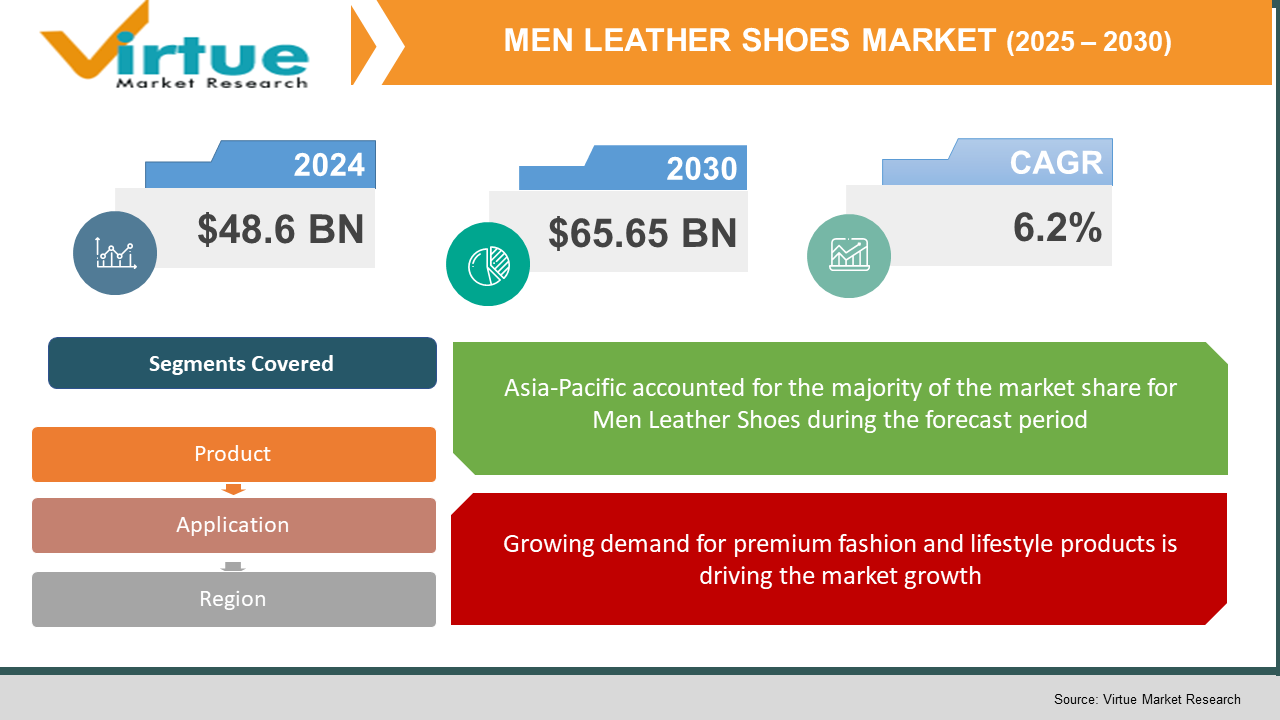
The Global Men Leather Shoes Market was valued at USD 48.6 billion in 2024 and is projected to grow at a compound annual growth rate (CAGR) of 6.2% from 2025 to 2030. By 2030, the market is expected to reach approximately USD 65.65 billion.
Men’s leather shoes include a wide variety of footwear made from genuine, synthetic, or composite leather, spanning categories such as formal shoes, casual shoes, boots, loafers, and designer collections. Leather shoes have long held a strong position in men’s wardrobes due to their durability, premium feel, and versatility for both professional and lifestyle purposes. This market is evolving with changing fashion trends, increased purchasing power in developing economies, and shifting workplace dress codes. Despite growing competition from non-leather and athletic footwear, men’s leather shoes retain a premium image associated with class, heritage, and professional aesthetics. The growing interest in handcrafted and designer leather shoes, along with the rise of sustainable leather alternatives, is also contributing to market dynamics. The demand is especially strong in urban areas, where fashion-conscious and career-driven consumers are willing to invest in durable, stylish footwear. Leather shoes for men continue to represent both a style statement and a functional purchase, with a wide spectrum of brands offering varying designs, price points, and quality levels. As consumer preferences shift toward personalized fashion, quality materials, and eco-conscious choices, the men’s leather shoes market is poised for stable and diversified growth during the forecast period.
Key market insights:
The market is projected to grow from USD 48.6 billion in 2024 to USD 69.9 billion by 2030, indicating consistent demand and expansion opportunities across regions.
Formal leather shoes accounted for over 38% of the global market revenue in 2024, driven by sustained demand from corporate sectors and special occasions.
Casual leather shoes are growing at a faster rate than formal styles, with a CAGR of over 7%, as consumers seek versatile and comfortable footwear for daily use.
Asia-Pacific is emerging as a key production and consumption hub, with countries like India, China, and Vietnam combining low-cost manufacturing with rising domestic demand.
Online sales channels now contribute to nearly 30% of all global men’s leather shoe purchases, with increasing influence from direct-to-consumer brands and e-commerce fashion platforms.
Consumers aged 25 to 40 represent the most active buyer group, driven by urbanization, disposable income, and interest in professional appearance.
Vegan leather and sustainable material alternatives are being increasingly adopted by manufacturers seeking to meet the preferences of environmentally conscious consumers.
Brand collaborations with fashion designers and influencers are boosting visibility for both luxury and streetwear-inspired leather footwear collections.

Global Men Leather Shoes Market Drivers
Growing demand for premium fashion and lifestyle products is driving the market growth
One of the most significant drivers for the men leather shoes market is the increasing demand for premium fashion items among male consumers globally. As fashion awareness spreads and social media amplifies lifestyle trends, men are paying more attention to their personal style. Leather shoes, which have long symbolized sophistication and class, are seen as an essential part of a polished and professional look. In both corporate and casual environments, the right pair of leather shoes adds value to an outfit and communicates a sense of taste. Moreover, premium leather shoes are being sought after not only for their visual appeal but also for their craftsmanship, quality, and longevity. The availability of custom-made, handcrafted, and designer shoes is further driving interest among fashion-forward consumers. With a rise in high-income urban professionals, especially in growing economies, there's an upward shift in the willingness to spend on high-quality leather footwear. The market has responded with innovations in design, seasonal collections, and luxury collaborations that make men’s leather shoes a status-driven purchase. This overall elevation of male fashion sensibilities is directly benefiting the growth of this market.
Increasing adoption of formal and semi-formal workplace cultures in emerging markets is becoming a key factor fueling market expansion
The expansion of corporate and business sectors in emerging economies has significantly increased the demand for formal and semi-formal attire, including leather shoes. Countries like India, Indonesia, the Philippines, and parts of Africa are experiencing rapid economic growth, resulting in a larger working population that adheres to workplace dress norms. Leather shoes, especially formal oxfords, derbies, and loafers, are often required in office settings and formal business events. Even semi-formal leather footwear has become a go-to option for jobs that require a smart yet comfortable dress code. As more multinational companies establish regional offices, and entrepreneurship grows, the demand for formal dressing rises in parallel. Educational institutions and social events also contribute to this trend, with graduation ceremonies, weddings, and professional gatherings often prompting men to purchase quality leather shoes. Many first-time buyers in these regions prefer leather due to its association with success and confidence. In turn, global brands are targeting these emerging regions with entry-level price points, regional influencers, and localized marketing. The growth of modern retail infrastructure, particularly in second-tier cities, is further enabling access to these products. This structural shift in work and lifestyle habits continues to generate consistent demand for men’s leather shoes.
Consumer preference for long-lasting and value-driven products is driving the market growth
Unlike many fast-fashion products that cater to short-term trends, leather shoes are appreciated for their durability and long-term value. In a market where consumers are becoming more selective and cost-conscious, leather shoes offer a strong proposition by combining quality, style, and longevity. Men, in particular, often prefer fewer pairs of shoes with higher quality rather than frequent purchases of low-cost alternatives. Leather shoes are known to last for years when properly maintained, which appeals to buyers looking for practicality. This mindset aligns well with the growing sustainability narrative, as consumers begin to question the wastefulness of disposable fashion. In addition, with many leather shoes now being designed with comfort-enhancing technologies such as cushioned soles and breathable linings, the perceived value has increased. The availability of services like resoling, repair, and polishing also extends the life of leather shoes, making them a wise investment. Even among younger consumers, who traditionally favored casual sneakers, there's growing appreciation for timeless styles and better-made products. As this preference for value over volume solidifies, the men’s leather shoes market stands to benefit through repeat purchases, brand loyalty, and positive word-of-mouth.
Global Men Leather Shoes Market Challenges and Restraints
Market growth is being hindered by unstable leather prices and growing ethical concerns surrounding its production
The men’s leather shoes market is closely tied to the global leather supply chain, which is subject to fluctuations in raw material costs and supply consistency. Prices for high-quality leather can rise sharply due to changes in livestock availability, environmental regulations, and trade restrictions. These fluctuations can squeeze manufacturer margins or force them to raise prices, affecting affordability and consumer perception. Additionally, ethical concerns around leather production—particularly related to animal welfare, tanning processes, and environmental impact—pose a challenge. Younger consumers are increasingly mindful of the ecological and ethical footprint of their purchases. The traditional leather industry is often viewed critically for its carbon emissions and chemical use. While alternatives like plant-based or recycled leather are being explored, they are not yet produced at scale, limiting options for mass-market adoption. Brands that fail to adapt to these consumer expectations risk losing relevance. The industry must continue to innovate in material sourcing and production processes to ensure sustainability and affordability can coexist without compromising product quality or reputation.
Strong competition from athletic and synthetic footwear is restricting the market growth
Another notable restraint in the men’s leather shoes market is the fierce competition from athletic footwear brands and synthetic material shoes. As lifestyles become more casual and remote work increases, many consumers are prioritizing comfort and versatility over formal appearance. Sports shoes, sneakers, and hybrid styles now dominate footwear trends, especially among younger demographics who favor activewear and relaxed dressing. Many of these alternatives are cheaper, lighter, and perceived to be more comfortable than traditional leather footwear. Additionally, synthetic leather shoes often replicate the look of real leather at lower costs, attracting budget-conscious buyers. With constant innovation in sportswear technologies, consumers are frequently drawn to brands offering breathability, ergonomic soles, and performance features. Leather shoe manufacturers must now compete not only on design but also on comfort and modern appeal. Unless leather footwear brands invest in updating their designs and integrating comfort-focused features, they risk losing market share to sport and fashion-forward rivals.
Market opportunities
The men’s leather shoes market offers several opportunities for growth across diverse consumer segments and regional markets. One major opportunity lies in the luxury and customization segment, where consumers are seeking personalized shoes crafted to their style and fit. With the rise of online configuration tools and on-demand production, brands can offer made-to-order leather shoes that cater to specific preferences in color, stitching, shape, and material. This customization trend also allows companies to charge premium prices and build stronger customer loyalty. Another area of opportunity is the integration of eco-friendly practices in the supply chain. The use of vegetable-tanned leather, water-based adhesives, and recycled components can appeal to environmentally conscious consumers and align with sustainability commitments. Markets in Southeast Asia, Eastern Europe, and Latin America offer untapped potential as rising middle-class populations begin to explore more refined fashion and footwear options. Affordable yet quality leather shoes can address the growing demand in these regions. Collaborations with local designers, regional influencers, and traditional artisans could also help global brands localize their collections and tap into cultural preferences. In the digital space, the rise of fashion-based e-commerce, virtual try-on tools, and social commerce platforms offers leather shoe brands the ability to connect directly with younger consumers and bypass traditional retail limitations. Additionally, brands that create strong after-sales services—like shoe care kits, repair programs, or loyalty rewards—can enhance customer experience and lifetime value. Overall, the market has space for players at every price level, provided they align with emerging values around craftsmanship, comfort, ethics, and self-expression.
MEN LEATHER SHOES MARKET REPORT COVERAGE:
|
REPORT METRIC
|
DETAILS
|
|
Market Size Available
|
2024 - 2030
|
|
Base Year
|
2024
|
|
Forecast Period
|
2025 - 2030
|
|
CAGR
|
6.2%
|
|
Segments Covered
|
By Product, Type, Consumption, Distribution Channel and Region
|
|
Various Analyses Covered
|
Global, Regional & Country Level Analysis, Segment-Level Analysis, DROC, PESTLE Analysis, Porter’s Five Forces Analysis, Competitive Landscape, Analyst Overview on Investment Opportunities
|
|
Regional Scope
|
North America, Europe, APAC, Latin America, Middle East & Africa
|
|
Key Companies Profiled
|
UrbanStride, Novo Pelle, Easton & Knox,
|
Men Leather Shoes Market segmentation
Men Leather Shoes Market segmentation By Product:
• Formal leather shoes
• Casual leather shoes
• Leather boots
• Leather loafers and slip-ons
• Designer leather shoes
Formal leather shoes continue to be the dominant product category due to their consistent use in business, professional, and ceremonial settings. Despite the increasing popularity of casualwear, formal shoes maintain their relevance across a range of industries and events. Oxfords, brogues, and derbies remain standard choices for office environments, interviews, and formal occasions. Many consumers purchase at least one pair of formal leather shoes during key life moments such as weddings, graduations, or job changes. Their timeless designs and universal appeal make them a wardrobe staple for men across demographics.
Men Leather Shoes Market segmentation By Application:
• Office and corporate wear
• Casual and lifestyle wear
• Special occasions and ceremonies
• Outdoor and travel wear
• Fashion and luxury segment
Office and corporate wear is the most dominant application segment, accounting for a large portion of global sales. Leather shoes are a critical part of business attire and are often required in professional dress codes. Whether in traditional industries like finance and law or in modern office settings, a well-polished pair of leather shoes is considered essential. With the return to hybrid work environments and in-person meetings, demand for formal and semi-formal shoes has remained stable. The segment also benefits from repeat purchases and brand loyalty due to wear-and-tear replacements.
Men Leather Shoes Market Regional segmentation

• North America
• Europe
• Asia-Pacific
• South America
• Middle East and Africa
The Asia-Pacific region is currently the most dominant in the men’s leather shoes market, with strong contributions from both manufacturing and consumption. Countries like India, China, and Vietnam play a key role as global leather goods production hubs due to their established tanning industries, skilled labor, and cost-effective manufacturing. Additionally, rising urbanization, disposable incomes, and awareness of international fashion trends have fueled domestic demand within these countries. Many consumers in cities such as Shanghai, Mumbai, Jakarta, and Manila are embracing western-style footwear, especially for professional and formal use. International brands are increasingly expanding their physical and digital presence in these markets through exclusive stores, e-commerce platforms, and regional influencer campaigns. Local brands are also gaining popularity by combining traditional craftsmanship with modern design. Southeast Asia’s emerging middle class, along with digital payment infrastructure and logistics improvements, make the region particularly promising. Moreover, the presence of leather craftsmanship in parts of India and Bangladesh supports local and export production, giving the region strategic significance. As Asia-Pacific continues to balance price, quality, and volume, it remains the most dynamic and dominant region for men’s leather shoes during the forecast period.
COVID-19 Impact Analysis on the Men Leather Shoes Market
The COVID-19 pandemic had a mixed but largely transformative impact on the men leather shoes market. In the early stages of the pandemic, demand fell sharply due to the closure of retail stores, supply chain disruptions, and a steep decline in formal gatherings and workplace attendance. As people stayed home, casual footwear and comfort-oriented products surged in popularity while formal leather shoes saw a sharp decline in sales. Manufacturers were forced to cut back on production, manage unsold inventory, and re-evaluate their distribution strategies. However, the pandemic also accelerated key long-term shifts that are now benefiting the market’s recovery. One major change was the surge in online shopping. Many consumers who had traditionally bought shoes in-store shifted to e-commerce, prompting brands to enhance their digital platforms and offer more engaging online experiences. The crisis also reignited consumer interest in quality over quantity, leading to greater appreciation for durable, multi-purpose shoes like leather loafers and hybrid dress shoes. Brands that had invested in sustainable practices, digital presence, and comfort-enhancing designs found themselves better positioned during recovery. Additionally, the increased emphasis on self-presentation during video conferencing contributed to a renewed focus on appearance from the waist up, indirectly affecting shirt and shoe sales. While the pandemic caused short-term contraction, it ultimately reinforced the need for flexibility, innovation, and a deeper connection with consumers. The industry is now operating with a stronger foundation and higher resilience.
Latest trends/Developments
The men’s leather shoes market is currently experiencing several trends that are shaping its evolution across price segments and geographies. One of the key developments is the fusion of formal and casual styles, leading to the rise of hybrid shoes that blend sleek aesthetics with everyday comfort. Loafers with sneaker soles, dress shoes with flexible linings, and lace-ups with waterproof layers are becoming more popular as men seek footwear that fits both office and weekend wardrobes. Another major trend is the emphasis on sustainable practices, where brands are shifting toward eco-conscious materials such as plant-tanned leather, recycled linings, and biodegradable soles. Consumers are increasingly asking for transparency about sourcing, labor conditions, and environmental impact. In addition, personalization is on the rise. Brands are offering custom size ranges, monogramming, and design personalization through digital platforms. E-commerce continues to dominate, with virtual fitting tools, AR-based try-ons, and AI-driven product recommendations enhancing the shopping experience. Regional designs and craftsmanship are gaining popularity too, with local aesthetics being incorporated into global collections. Limited-edition drops and collaborations with fashion designers, musicians, or influencers are also keeping the product lines fresh and desirable. Technology is making its way into even classic leather shoes with features like memory foam insoles, anti-odor linings, and ergonomic designs. Packaging innovations, faster delivery models, and brand storytelling centered on heritage are also important elements of current brand strategies. All these trends indicate a shift toward a more adaptive, inclusive, and consumer-centric leather shoe market.
Key Players:
- UrbanStride
- Novo Pelle
- Easton & Knox
- Monarch Leather Co.
- Formex Footwear
- Vintaro Shoes
- Stanton Brogue
- Lavidor Leatherworks
- Crestino Formalwear
- GroundAce Originals




