Dog Cancer Therapeutics Market Size (2023-2030)
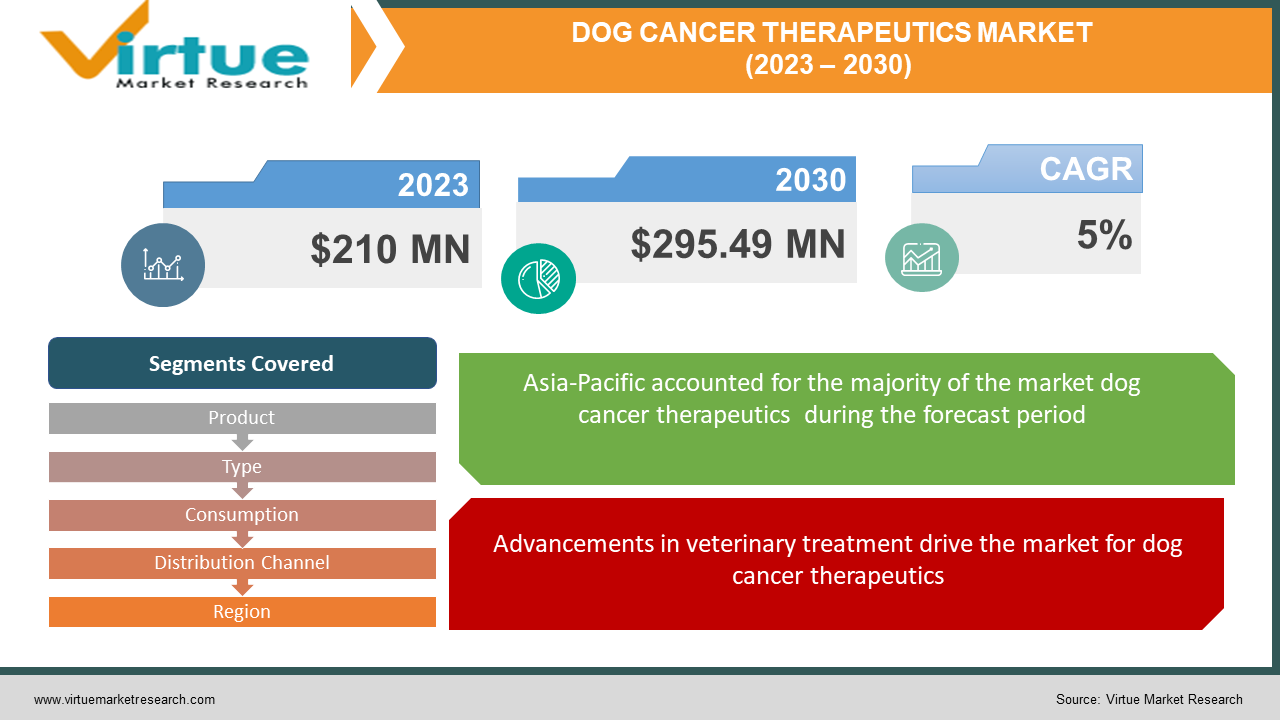
The Global Dog Cancer Therapeutics Market was valued at USD 210 million and is projected to reach a market size of USD 295.49 million by the end of 2030. Over the forecast period of 2024-2030, the market is projected to grow at a CAGR of 5%.
Dog cancer therapeutics is a medical treatment that focuses on managing and treating cancer in dogs. Cancer in dogs can take various forms such as tumours, abnormal cell growth, malignant neoplasms, and others. Further, cancer in dogs is one of the leading causes of death in dogs, especially old-aged dogs. As per AVMA (American Veterinary Medical Association) 1 in 4 dogs suffer from neoplasia – (it is an uncontrolled and abnormal growth of cells or tissues in the dog’s body that is referred to as neoplasm or tumour.). Further, dogs are more prone to getting cancer compared to other animals such as cats. Therefore, cancer therapeutics for dogs have gained momentum that helps in controlling and preventing the disease, reducing cancer symptoms, and improving dogs’ quality of life. Furthermore, some of the common symptoms that pose a threat to the dog’s life include abnormal growth of cells, lumps growth, weight loss and appetite loss, lethargy, persistent lameness, and others. Hence, there is a rising need to mitigate these symptoms in dogs and save their lives. Some of the therapeutics include surgical procedures such as removing a tumour from the dog’s body, chemotherapy that uses anti-cancer drugs to destroy cancer cell growth in dogs, radiation therapy that uses high-energy beams for destroying cancer cells, and immunotherapy that utilizes immune-boosting drugs to boost dog’s immune system and reduce the exposure of cancer cells attacking the dog’s body.
Apart from this, developments in veterinary treatments and research and developments in dog cancer therapeutics have boosted the market for dog cancer therapeutics.

Global Dog Cancer Therapeutics Market Drivers:
Advancements in veterinary treatment drive the market for dog cancer therapeutics.
The veterinary treatment sector has witnessed immense growth in recent years owing to rapid advancements in medical science and technology, which includes imaging technologies, surgical procedures, cancer detection and prevention techniques, and others. Further imaging technologies have helped veterans to detect cancer growth in dogs and recommend measures to curb them. These include the use of ultrasound technology that uses sound waves to generate images of the internal organs of a dog, computed tomography is used to get detailed cross-sectional images of the dog’s body such as tumours, lymph nodes, and others, magnetic resonance imaging (MRI) is used in cases of complexity for analyzing brain tumours through images generated by magnetic and radio waves, and others that help veterinarians visualize tumours, assess the size of the tumour, analyze the cell growth in surrounding areas, and others. Moreover, developments in scanning technology such as generating 3D images of the body using CT scans have contributed towards the market growth of dog cancer therapeutics. In addition to that, the use of molecular diagnostics has increased in veterinary oncology to analyze the genetic and molecular markers in dogs which further helps veterinarians to understand the genetic mutations in specific types of cancer. These advancements have helped veterinarians make better treatment decisions and develop better treatment strategies for dog cancer.
The increasing incidence of cancer in dogs has boosted the market for dog cancer therapeutics.
There has been an increase in cancer in dogs that are contributing towards dog cancer therapeutics, as it helps to increase the lifespan of dogs and improve their immunity. Moreover, as per National Cancer Institute, each year, 6 million new cancer diagnoses are made in dogs and lymphoma is the most common cancer seen in dogs. Further, environmental factors are one of the prime reasons for cancer in dogs. Dogs' exposure to tobacco smoke, chemicals, pesticides, pollutants, and others has increased the risk of cancer in them such as nasal and lung cancer. Additionally, genetic mutation in dog breeds is a major contributor to cancer development in dogs. The most common breeds exposed to genetic cancer mutation include golden retrievers, Bernese mountain dogs, Scottish terriers, and boxers. Further, improvement in diagnostic capabilities helps to detect early-stage cancer development in dogs and reduces dog mortality due to cancer to a greater extent.
Global Dog Cancer Therapeutics Market Challenges:
The expensive cost of cancer treatment is the biggest challenge to this market. Expensive treatment costs such as specialized therapies, diagnostics, and supportive care can be a burden for pet owners. Further, complex cancer types require advanced treatments including radiation therapy, which increases the cost of treatment. Apart from this, the expensive cost of post-treatment drugs that helps in boosting the immunity of dogs and supportive care services by veterinarian centre can act as a deterrent to the market growth of dog cancer therapeutics.
Global Dog Cancer Therapeutics Market Opportunities:
The Global Dog Cancer Therapeutics Market is anticipated to deliver lucrative opportunities for businesses, which include acquisitions, partnerships, collaborations, product launches and agreements during the forecasted period. Furthermore, owing to the increase in cancer risks among dogs and advancements in veterinarian oncology are predicted to develop the market for Dog Cancer Therapeutics and enhance its future growth opportunities.
COVID-19 Impact on Global Dog Cancer Therapeutics Market:
The pandemic had affected the dog cancer therapeutics market. Due to the global lockdown, there was limited access to veterinary services as hospitals and other healthcare centres were more focused on treating virus-infected human patients. Moreover, there was a delay in seeking veterinary services, which resulted in a delay in cancer therapy in dogs. Further, due to supply chain disruption, there was a shortage of medical equipment and components that were essential in the diagnosing of cancer in dogs. However, the emerging trend of telemedicine increased dog health consultations online, which helped to reduce future disease risks in dogs.
Global Dog Cancer Therapeutics Market Recent Developments:
- In May 2022, Jaguar Animal Health launched Canine Cancer – Take CHARGE (Canine Health and Registry Exchange) which aimed to provide a canine cancer care index to veterinarians and dog owners with important information on cancer incidence and prevalence data for diagnosis and treatment purposes.
- In July 2021, FDA (US Food and Drug Administration), approved Tanovea (rabacfosadine injection for the treatment of cancer in dogs. It aimed to treat Lymphoma – a type of cancer that affect various body parts of the dog.
DOG CANCER THERAPEUTICS MARKET REPORT COVERAGE:
|
REPORT METRIC
|
DETAILS
|
|
Market Size Available
|
2022 - 2030
|
|
Base Year
|
2022
|
|
Forecast Period
|
2023 - 2030
|
|
CAGR
|
5%
|
|
Segments Covered
|
By Product, Type, Consumption, Distribution Channel and Region
|
|
Various Analyses Covered
|
Global, Regional & Country Level Analysis, Segment-Level Analysis, DROC, PESTLE Analysis, Porter’s Five Forces Analysis, Competitive Landscape, Analyst Overview on Investment Opportunities
|
|
Regional Scope
|
North America, Europe, APAC, Latin America, Middle East & Africa
|
|
Key Companies Profiled
|
Aratana Therapeutics, Vetivax, Regeneus, Zoetis, Torigen Pharmaceuticals, Qbiotics, ELIAS Animal Health, NovaVive
|
Global Dog Cancer Therapeutics Market Segmentation:
Global Dog Cancer Therapeutics Market Segmentation: By Cancer Type
- Lymphoma
- Mast Cell Tumours
- Melanoma
- Neoplasm
- Others
Based on market segmentation by cancer type, lymphoma is the most common cancer type in dogs. It is a cancer in the lymphatic system that is a part of the immune system. It affects various organs such as lymph nodes, spleen, liver, and bone marrow. Further, its symptoms include difficulty in breathing, vomiting, and diarrhoea. Further, the most common breed affected by this cancer is golden retrievers. Moreover, treatments like chemotherapy and multidrug therapy witness an increasing need to cure this type of cancer.
Mast cell tumour is the second most common type of cancer in dogs, especially common in boxers and bulldogs. It forms on the skin of the dog and affects the immune cells of dogs. Its symptoms include vomiting, diarrhoea, and loss of appetite. Further, chemotherapy and radiation therapy is the most common treatment that helps to reduce the tumour in the dog’s body.
Melanoma is a type of oral cancer that is most commonly found in dog breeds with dark tongues and gums. These breeds include Doberman pinschers, standard and miniature schnauzers, chow chows, and Scottish terriers. Melanoma is composed of dark pigment cells that are found anywhere on the body and can spread throughout the body by the oral cavity. Further, it is the most difficult cancer to cure and often requires advanced therapies such as radiation therapy and immune-based therapy.
Global Dog Cancer Therapeutics Market Segmentation: By Treatment Type
- Chemotherapy
- Radiation Therapy
- ImmunoTherapy
- Others
Based on market segmentation by treatment type, chemotherapy occupies the highest share in the market. It is the most common treatment used for dog cancer that helps to kill cancer cells and reduce the risk of cancer. Further, its capability to target cancer cells and its spread to other parts of the body makes it a popular option for treating dog cancer. Further, it aids in reducing cancer cell growth by shrinking tumours, controlling their growth, and eliminating the symptoms of cancer. Furthermore, it is considered a primary treatment for certain cancer types such as lymphoma and helps in improving the quality of life of dogs.
Radiation therapy occupies a significant share of the market owing to destroying cancer cells both internally and externally. It utilizes high-energy beams to destroy cancer cells. Moreover, it is further classified into two types – External beam radiation therapy and Brachytherapy. External beam radiation therapy utilizes an external machine that directs the radiation beams towards the tumour areas and brachytherapy places the radiation source inside the tumour of the dog. Both these types of therapy help to minimize damage to the healthy tissues and improve the dog’s health. Further, it is often used in combination with other therapies such as chemotherapy to increase a dog’s lifespan and prevents the cells from growing further in the body.
Immunotherapy occupies a sizeable market share owing to its ability in stimulating the immune system and destroy cancer cells. This is done via various approaches such as immune checkpoint inhibitors, monoclonal antibodies, and cancer vaccines. Further, immunotherapy is not effective for all types of cancer and require careful assessment and recognition of specific cancer type in dogs, their stages, and overall health.
Global Dog Cancer Therapeutics Market Segmentation: By Region
- North America
- Europe
- Asia Pacific
- Middle East and Africa
- South America
Due to rising pet ownership and an increase in demand for pet healthcare, the demand for dog cancer therapeutics has increased in the region. Nearly, every household in North America owns a pet, of which dog is the most common type of pet. Further, dog owners consider their dogs as family members and companions, giving rise to the demand for pet healthcare in the region. Further, people in this region regularly consult veterinarians for a monthly check-up of their dogs that prevents them from future health risks. Further, the easy availability of advanced medicines and veterinarian oncologists have bolstered the market for dog cancer therapeutics in the region
Asia-Pacific is the fastest growing region during the forecast period owing to rising awareness about pet healthcare among pet owners and an increase in the presence of non-profit organizations and animal welfare organizations that have contributed towards the growth of dog cancer therapeutics in the region. Further, frequent pet-health awareness campaigns and seminars have increased the demand for dog cancer therapies that helps in improving the quality of life of dogs in the long run.
Global Dog Cancer Therapeutics Market Key Players:
- Aratana Therapeutics
- Vetivax
- Regeneus
- Zoetis
- Torigen Pharmaceuticals
- Qbiotics
- ELIAS Animal Health
- NovaVive




