GLOBAL CYSTIC FIBROSIS THERAPEUTIC DEVICES MARKET SIZE (2023 – 2030)
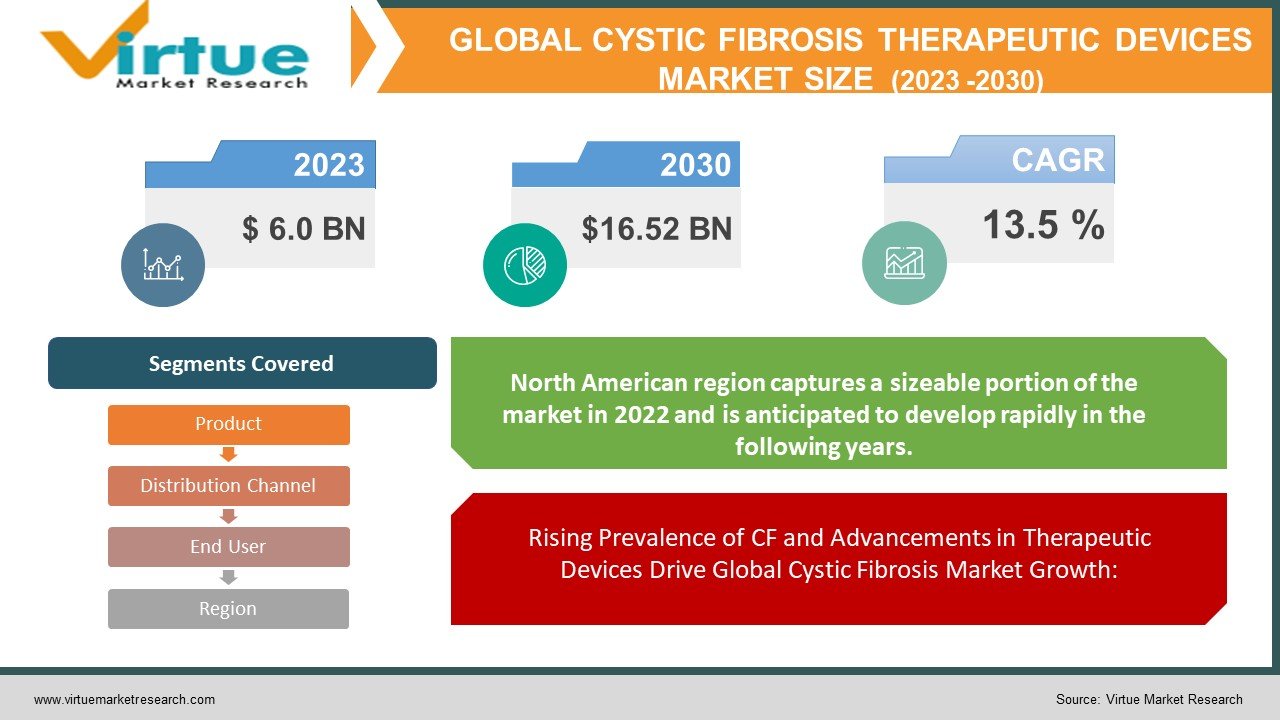
The Global Cystic Fibrosis Therapeutic Devices Market was estimated to be worth USD 6 Billion in 2023 and is projected to reach a value of USD 16.52 Billion by 2030, growing at a fast CAGR of 13.5% during the forecast period 2023-2030.
It is a chronic illness with major effects on the lungs, the digestive system, and other body organs. Breathing problems, lung infections like pneumonia or bronchitis, weight gain, and bowel movement issues are some of the most typical symptoms of persons with the disease.
According to the Cystic Fibrosis Patient Registry, there are more than 30,000 persons with this illness in the United States and more than 70,000 people worldwide. In addition, each year more than 1000 new cases of the illness are diagnosed. The prevalence of this disease is projected to increase, which will fuel demand for combination therapies and promote industry growth in the coming years. Nonetheless, the market is growing as a result of the forthcoming release of drugs to treat CF. The introduction of drugs that target the defect in sick people's cells will boost market expansion during the expected term. The likelihood that this treatment will drastically alter a large number of people's lives is influencing the market's expansion. Also, it is believed that an increase in the disease's prevalence is the main factor driving the market. This is speeding up the launch of recently developed pipeline drugs required for the treatment of critically ill patients. Many potential candidates are also nearing completion of their development and believe the market will soon increase. The market is also estimated to expand as a result of technologically advanced devices used for a range of serious conditions, including mucus thinners, airway clearance techniques, and others. As a result, it is projected that this factor will promote growth in the worldwide cystic fibrosis market.
Global Cystic Fibrosis Therapeutic Devices Market Drivers:
Rising Prevalence of CF and Advancements in Therapeutic Devices Drive Global Cystic Fibrosis Market Growth:
-
The demand for treatment devices is rising as CF is becoming more commonplace globally. The Cystic Fibrosis Foundation estimates that 70,000 people worldwide have the disease and that 1,000 new cases are identified every year. The market is expanding due to the creation of cutting-edge therapeutic gadgets. For instance, more effective and user-friendly nebulizers and inhalers are being created, which is enhancing patient compliance.
The increasing awareness among people is driving the demand for cystic fibrosis therapeutic devices:
-
The demand for therapeutic devices is being driven by greater knowledge about cystic fibrosis and the available treatments. Programs for patient education and support are assisting in spreading awareness of the ailment and the value of using therapeutic gadgets. Numerous governments are launching measures to raise the standard of living for people with CF. For instance, the Cystic Fibrosis Foundation in the US contributes funds to the study and creation of therapeutic devices. The need for therapeutic devices is being driven by rising healthcare costs in emerging nations. More persons with CF are able to obtain therapy and employ therapeutic devices as the healthcare system in these nations’ advances.
Global Cystic Fibrosis Therapeutic Devices Market Challenges:
Therapeutic devices for cystic fibrosis can be extremely expensive, especially for those without adequate insurance coverage. This may restrict access to these tools and make it more challenging for patients to adequately manage their illnesses. Devices for treating cystic fibrosis could not be generally accessible everywhere, especially in underdeveloped nations with weak healthcare systems. This may restrict patients' access to the necessary devices in certain areas. While the demand for therapeutic devices is increasing as more people become aware of cystic fibrosis, many people are still unaware of the ailment or the value of utilizing these devices. In some areas, this may result in a lack of demand for therapeutic equipment.
Global Cystic Fibrosis Therapeutic Devices Market Opportunities:
The market for cystic fibrosis therapeutic devices offers tremendous opportunity for product innovation, notably in the creation of more effective and user-friendly devices. This might boost interest in these gadgets and enhance patient outcomes. The market for cystic fibrosis treatment devices is greatly impacted by the expanding healthcare infrastructure and rising healthcare spending in emerging markets. The need for therapeutic devices is projected to rise as more individuals in these areas get access to healthcare. Access to cystic fibrosis treatment devices can be facilitated via alliances and partnerships between medical device producers, research institutions, and healthcare providers. Awareness of the significance of adopting therapeutic devices for the management of cystic fibrosis can be increased through increased patient participation and education.
Impact of COVID-19 on the Global Cystic Fibrosis Therapeutic Devices Market:
Hospital surgeries and medical appointments have been cancelled as a result of the nationwide lockdowns brought on by COVID-19. For a while, this dampened the industry's growth; however, the increase in respiratory ailment cases following the COVID-19 pandemic has sparked the cystic fibrosis industry's expansion. The major industry participants now have the chance to concentrate on creating innovative medications that will hasten to heal and lower mortality rates worldwide.
Global Cystic Fibrosis Therapeutic Devices Market Recent Developments:
-
In October 2022, The US FDA gave Vertex Pharmaceuticals permission to market Trikafta, a triple combination medication for cystic fibrosis.
-
In August 2021, the new Trilogy Evo portable ventilator was introduced by Philips Respironics, a branch of Royal Philips, and is intended to provide advanced breathing support for those with cystic fibrosis and other respiratory conditions. In order to increase patient comfort and therapy effectiveness, the device has features including automated leak compensation and adaptive triggering.
GLOBAL CYSTIC FIBROSIS THERAPEUTIC DEVICES MARKET REPORT COVERAGE:
|
REPORT METRIC
|
DETAILS
|
|
Market Size Available
|
2022 - 2030
|
|
Base Year
|
2022
|
|
Forecast Period
|
2023 - 2030
|
|
CAGR
|
13.5 %
|
|
Segments Covered
|
By Product, Distribution Channel, End User and Region
|
|
Various Analyses Covered
|
Global, Regional & Country Level Analysis, Segment-Level Analysis, DROC, PESTLE Analysis, Porter’s Five Forces Analysis, Competitive Landscape, Analyst Overview on Investment Opportunities
|
|
Regional Scope
|
North America, Europe, APAC, Latin America, Middle East & Africa
|
|
Key Companies Profiled
|
Broadcom, Silicon Labs, Qualcomm, Infineon Technologies, Telit, Espressif Systems, Insight SiP, Laird Connectivity, Taiyo Yuden, RealTek
ONSemiconductor, NordicSemiconductor, Texas Instruments, Atmosic Technologies
|
Global Cystic Fibrosis Therapeutic Devices Market Segmentation:
Global Cystic Fibrosis Therapeutic Devices Market Segmentation: By Product
-
Airway Clearance Systems
-
Nebulizers
-
Oxygen Therapy Devices
-
Ventilators
-
Others
These tools are used to assist cystic fibrosis patients in clearing mucus from their airways. These could be positive expiratory pressure (PEP) devices, which utilize controlled pressure to assist patients in coughing up mucus, or oscillation devices, which use vibrations to loosen and remove mucus. The use of nebulizers allows for the direct inhalation of a fine mist of medication that was previously in liquid form into the lungs. They are frequently employed to give bronchodilators, antibiotics, and other medications to cystic fibrosis patients. To help patients with cystic fibrosis breathe easier and get more oxygen in their blood, further oxygen therapy may be necessary. Portable oxygen tanks, oxygen concentrators, and other tools for patient oxygen delivery might be considered oxygen treatment equipment.
Global Cystic Fibrosis Therapeutic Devices Market Segmentation: By Distribution Channel
-
Direct Distribution
-
Retail Distribution
In 2022, the healthcare industry recorded the biggest revenue share. The increasing incidence of the condition and the requirement for precise diagnosis and follow-up treatments under medical supervision are related to the segmental increase. The hospital segment grows as a result of an increase in patient hospital visits.
Also, the growing number of patients visiting the hospital for appointments and follow-up visits is responsible for the increasing revenue contribution from hospital pharmacies. The influx of patients being admitted to hospitals is also accelerated by the growing collaboration between healthcare facilities and medical practitioners. These elements will boost the hospital's segment revenue and the expansion of the entire market.
Global Cystic Fibrosis Therapeutic Devices Market Segmentation: By End-User
-
Hospitals
-
Homecare Settings
-
Speciality clinics
-
Others
Since hospitals are in charge of identifying and treating people with cystic fibrosis, they are the main end consumers of therapeutic equipment for the condition. Hospitals may employ a range of therapeutic tools, such as ventilators, nebulizers, and airway clearance systems, to control cystic fibrosis symptoms and enhance patient outcomes. Patients with cystic fibrosis increasingly depend on homecare settings because they let them get care in the comfort of their own homes. Nebulizers and airway-clearing systems are two examples of treatment tools for cystic fibrosis that may be recommended by medical professionals to help individuals control their symptoms.
Global Cystic Fibrosis Therapeutic Devices Market Segmentation: By Region
-
North America
-
Europe
-
Asia Pacific
-
Rest of the World
North American region captures a sizeable portion of the market in 2022 and is anticipated to develop rapidly in the following years. Due to the rising prevalence of cystic fibrosis and the wide range of available treatments in the area, the region made the most contribution to the study.
The cystic fibrosis community may now share the most recent advancements in R&D due to educational forums offered by the North American Cystic Fibrosis Conference (NACFC). Additional elements, including the presence of significant market competitors, an advanced healthcare infrastructure, and reimbursements, are anticipated to fuel market expansion.
Global Cystic Fibrosis Therapeutic Devices Market Key Players:
-
Broadcom
-
Silicon Labs
-
Qualcomm
-
Infineon Technologies
-
Telit
-
Espressif Systems
-
Insight SiP
-
Laird Connectivity
-
Taiyo Yuden
-
RealTek
-
ON Semiconductor
-
Nordic Semiconductor
-
Texas Instruments
-
Atmosic Technologies




