Global AI Data Center Power Infrastructure Market (2026 - 2030)
As per our research report, the global AI Data Center Power Infrastructure Market is growing at a robust compound annual growth rate (CAGR) of 18% during the forecast period of 2026–2030.
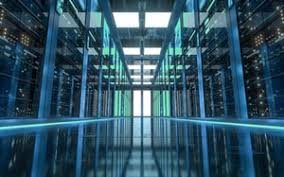
AI data center power infrastructure forms the backbone of modern artificial intelligence computing environments. Unlike traditional data centers, AI-focused facilities operate under sustained, high-intensity workloads driven by large-scale model training, inference, and real-time data processing. These workloads demand extremely high levels of power availability, stability, redundancy, and scalability. As a result, power infrastructure is no longer a supporting utility but a strategic asset that directly determines performance, uptime, and cost efficiency. The market is witnessing rapid expansion as hyperscale cloud providers, AI companies, and enterprises race to deploy high-density compute infrastructure. The accelerating adoption of generative AI, large language models, and real-time analytics is pushing data center operators to rethink how power is generated, distributed, conditioned, and backed up. This shift is driving unprecedented investment in transformers, switchgear, UPS systems, busway solutions, and advanced power management technologies.
The AI Data Center Power Infrastructure Market is expected to grow significantly in the coming years due to a combination of technological, operational, and structural forces reshaping the global data center landscape. One of the primary growth drivers is the explosive rise in AI compute intensity. Average rack power density in AI-focused data centers crossed 15 kilowatts per rack in 2025, compared to single-digit kilowatt levels just a few years earlier. Training large AI models requires continuous high-load operation of GPUs and accelerators, placing enormous strain on power delivery systems and driving demand for higher-capacity, more resilient infrastructure.
The COVID-19 pandemic had a mixed but ultimately reinforcing impact on the AI Data Center Power Infrastructure Market. During the early stages of the pandemic, supply chain disruptions affected the availability of critical components such as transformers, switchgear, and power electronics. Manufacturing slowdowns, logistics bottlenecks, and workforce constraints delayed certain infrastructure projects and extended deployment timelines. However, the pandemic also triggered an unprecedented surge in digital activity, cloud adoption, and remote computing. Enterprises accelerated their reliance on cloud platforms, AI analytics, and digital services, significantly increasing demand for data center capacity. AI workloads expanded rapidly across healthcare, finance, logistics, and government applications, reinforcing the importance of resilient power infrastructure. Post-pandemic, investment momentum strengthened as data centers were recognized as mission-critical infrastructure. Operators prioritized power resilience, redundancy, and scalability, leading to sustained demand for high-performance power systems. The crisis also highlighted the importance of modular and flexible power architectures that can be deployed rapidly under uncertain conditions.
Technological advancements are fundamentally reshaping how power is designed and managed within AI data centers. Traditional power architectures built for enterprise IT loads are no longer sufficient for AI workloads that operate at sustained peak utilization. Innovations in high-capacity UPS systems, intelligent power distribution units, modular busway systems, and AI-enabled power monitoring software are enabling operators to improve efficiency, reduce downtime, and optimize energy use. Integration between power and cooling systems is also becoming increasingly important as higher rack densities generate extreme thermal loads. The transition toward liquid-cooling compatible power infrastructure is particularly significant. As rack power densities exceed 30 kW, power systems must support higher voltages, improved redundancy, and closer coordination with cooling technologies.
KEY MARKET INSIGHTS
- Based on component, Uninterruptible Power Supply (UPS) Systems represent the most dominant segment within the AI Data Center Power Infrastructure Market. In 2025, UPS and power conditioning systems account for an estimated 42 to 46% of total market spending. Their dominance is rooted in the absolute requirement for zero-interruption power continuity in AI-driven environments. Even millisecond-level outages can lead to data loss, model corruption, or costly downtime. AI workloads operate under sustained high loads, making voltage stabilization, power conditioning, and seamless backup power indispensable. Busway & Power Cable Systems are the fastest-growing component segment. This growth is driven by the shift toward high-density, modular data center designs. Traditional hard-wired cabling struggles to support frequent rack reconfigurations and rising power density. Busway systems provide scalable, flexible power distribution, enabling rapid expansion with minimal disruption.
- Based on power capacity, the 10 to 50 MW segment is the most dominant in 2025. This reflects the growing number of mid-to-large AI data centers being developed by cloud providers, colocation operators, and enterprises seeking to secure power amid grid constraints. The rapid rise in rack power density has accelerated demand for upgraded transformers, medium-voltage switchgear, and high-capacity UPS systems within this range. Larger facilities above 50 MW are also expanding, but the 10–50 MW segment represents the core of current AI infrastructure deployment.
- Based on configuration, Centralized Power Infrastructure remains the most dominant segment in 2025. Large AI data center campuses rely on centralized transformers, switchgear rooms, and bulk UPS installations to achieve economies of scale, standardized management, and predictable performance. However, Modular Power Infrastructure is the fastest-growing configuration segment. As AI workloads evolve rapidly and demand forecasting becomes more uncertain, operators increasingly favor modular UPS systems, prefabricated power modules, and distributed architectures. Modular designs enable faster deployment, incremental scaling, and improved fault isolation, reducing both downtime and capital risk.
- Based on Data Center Type, Hyperscale AI Data Centers dominate the application segment. Operated by global cloud and AI leaders, these facilities host the most power-intensive compute clusters and drive the majority of infrastructure investment. Their continuous expansion sets industry benchmarks for power density, redundancy, and efficiency. Colocation Data Centers are the fastest-growing segment. As enterprises and AI startups seek access to high-performance compute without building their own facilities, demand for AI-ready colocation capacity is surging. Colocation providers are upgrading power infrastructure to support high-density AI racks, driving demand for modular UPS systems, intelligent PDUs, and flexible busway solutions.
- Based on end user, Cloud Service Providers hold the most dominant share of the market in 2025. They account for over 60% of new global data center power infrastructure investments, driven by massive AI deployment, real-time monitoring needs, and dynamic load management requirements. AI & Machine Learning Companies are the fastest-growing end-user segment during 2026 to 2030. These organizations are recording double-digit growth in AI-ready facilities and prioritize modularity, speed of deployment, and flexible reconfiguration over traditional fixed infrastructure.
- Based on Cooling-Power Integration, Traditional Air-Cooled Power Systems remain the most widely used and dominant segment in 2025 due to existing infrastructure, lower costs, and easier retrofit compatibility for low- to mid-density environments.Liquid-Cooling Compatible Power Infrastructure is the fastest-growing segment. The rapid adoption of hyperscale AI-first data centers and ultra-high-density racks is driving demand for power systems designed to integrate seamlessly with advanced cooling technologies.
- Based on region, North America commands the largest share of the AI Data Center Power Infrastructure Market. This dominance is supported by the concentration of hyperscale cloud providers, advanced digital infrastructure, and sustained AI investment across the United States and Canada. Mature power engineering expertise and early adoption of next-generation technologies further strengthen the region’s position. Asia-Pacific is the fastest-growing regional market. Growth is fueled by aggressive data center expansion in China, India, Japan, South Korea, and Southeast Asia. Government-led digital transformation initiatives, rising cloud adoption, and increasing regional AI compute demand are driving large-scale power infrastructure investments, positioning Asia-Pacific as the most dynamic growth frontier.
- Companies playing a leading role in the Global AI Data Center Power Infrastructure Market profiled in this report are Schneider Electric, ABB, Siemens, Eaton, Vertiv, Mitsubishi Electric, GE Vernova, Delta Electronics, Legrand, and Huawei Digital Power.
By Component
•Transformers
• Switchgear & Circuit Breakers
• Uninterruptible Power Supply Systems
• Power Distribution Units
• Busway & Power Cables
• Generators and Power Backup Systems
• Others
By Power Capacity
• Below 10 MW
• 10–50 MW
• 50–100 MW
• Above 100 MW
By Configuration
• Centralized Power Infrastructure
• Modular Power Infrastructure
• Distributed Power Infrastructure
By Data Center Type
• Hyperscale AI Data Centers
• Colocation Data Centers
• Enterprise AI Data Centers
• Edge AI Facilities
By End User
• Cloud Service Providers
• AI & Machine Learning Companies
• Enterprises
• Telecom Operators
• Government & Defense Organizations
By Cooling-Power Integration
• Traditional Air-Cooled Power Systems
• Liquid-Cooling Compatible Power Infrastructure
• High-Density Rack Power Systems (>30 kW per rack)
By Region
• North America
• Asia-Pacific
• Europe
• South America
• Middle East & Africa
Request Sample of the Report @ https://virtuemarketresearch.com/report/ai-data-center-power-infrastructure-market/request-sample
RECENT POSTS

Security Awareness & Phishing Simulation Market
28 Apr 2026
Network Detection & Response (NDR) Market
28 Apr 2026
Liquid Cooling for High-Density Market
28 Apr 2026